

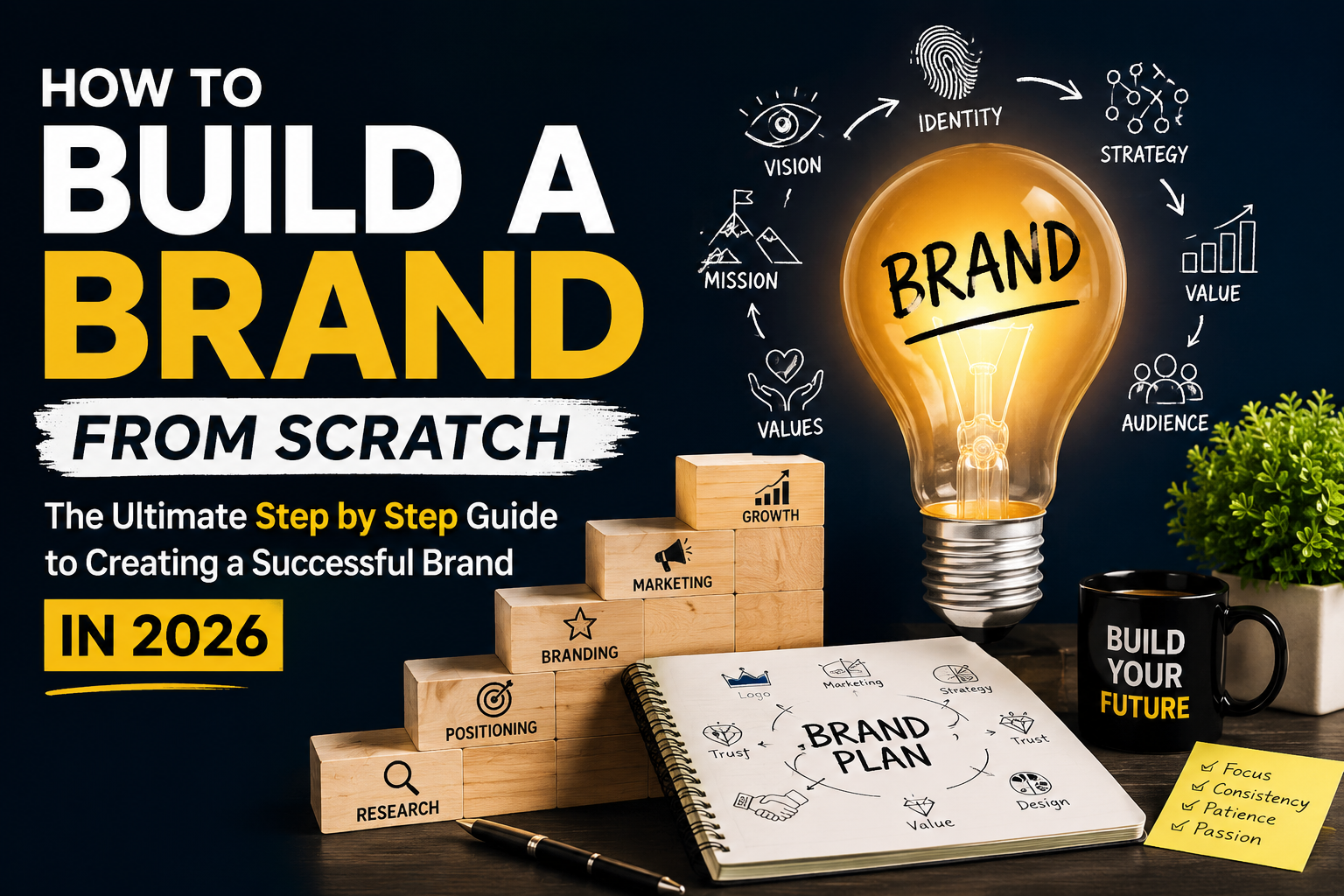
Most people think branding means a nice logo and a catchy name. I used to think that too, until I watched a client spend two lakhs on a logo redesign while their actual business had zero clarity on who they were even talking to How to Build a Brand from Scratch
That logo never fixed a single sale.
Here is the truth nobody tells you when you are starting out. A brand is not what you put on your website. It is what people say about you when you are not in the room. And building that takes more than design, it takes a system.
This guide walks you through that system, step by step, the way I would explain it to a friend starting their own business this year.
Table of Contents
ToggleIntroduction
So what exactly is brand building, and why should you care right now in 2026?
A brand is the sum of every impression someone forms about your business. Your name, your tone, your packaging, how fast you reply to a DM, even the font on your invoice. All of it adds up in someone’s head and forms an opinion of you.
Why does this matter more now than ever? Because attention is shorter, competition is louder, and AI tools have made it easy for anyone to launch a business overnight. The thing that still cannot be copied overnight is a brand people trust.
By the end of this guide, you will know exactly how to define your brand identity, build it piece by piece, avoid the mistakes that quietly kill new brands, and turn that identity into actual revenue.
Quick answer How to Build a Brand from Scratch
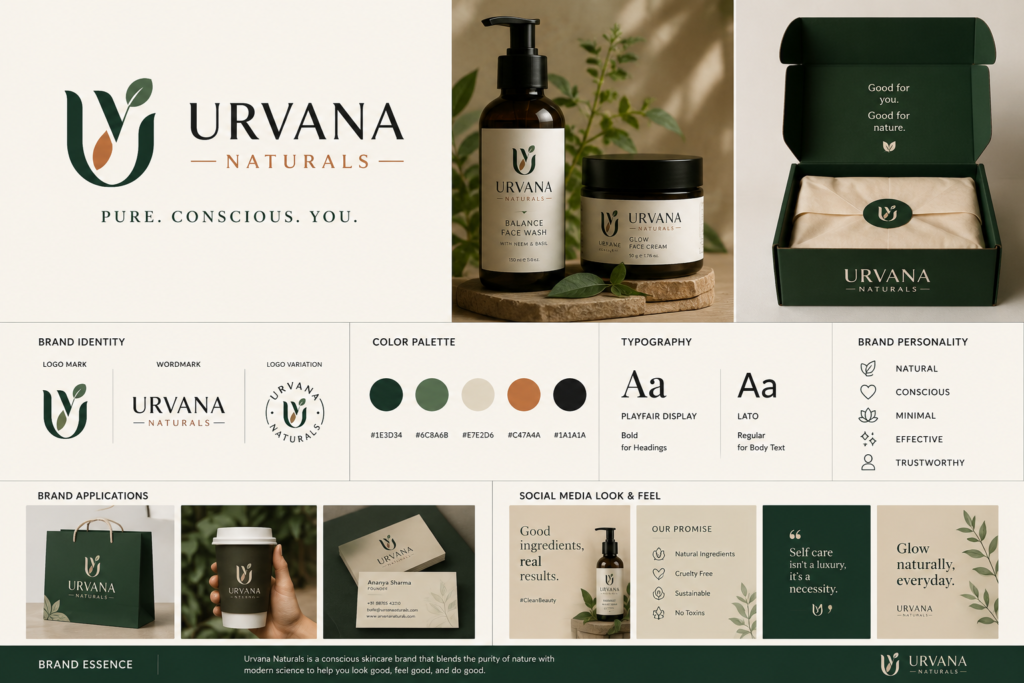
Building a brand from scratch means defining your purpose and audience first, then creating a consistent visual and verbal identity, choosing the right channels to show up on, and staying consistent long enough for people to recognize and trust you. It usually takes three to six months of focused work before a brand starts feeling established, and longer before it becomes profitable on its own.
What is brand building, really?
Brand building is the ongoing process of shaping how people perceive your business. It is not a one time project you finish and forget.
Think of it like a relationship. You do not become someone’s trusted friend after one good conversation. It happens over repeated, consistent interactions that build a pattern in their mind.
Here is a simple example. Nike does not sell shoes as their core brand message. They sell the feeling of pushing past your limits. That message shows up in every ad, every athlete partnership, every tagline. That repetition over decades is what built the brand, not any single campaign.
For a small business owner reading this, the lesson is simple. Pick what you stand for, and repeat it everywhere, consistently, for a long time.
Why brand building actually matters
A lot of business owners skip branding because they think it is a luxury for big companies. That thinking costs them money every single month.
Here is why it matters in practical terms.
People pay more for brands they trust. A salon with strong branding can charge more than the one next door doing the exact same service, simply because clients feel safer choosing them.
Branding reduces your marketing cost over time. When people already know and trust you, your ads convert better and your cost per lead drops.
It also protects you from competition. Anyone can copy your service or your pricing. Nobody can copy how your customers feel about you.
And it makes hiring easier too. Good people want to work for brands that stand for something, not just another shop trying to survive.
The complete step by step process to build your brand
Step 1: Define your brand purpose
What it means
This is your reason for existing beyond making money. It answers the question, why does this business need to exist at all.
Why it matters
Without a clear purpose, every other branding decision becomes a guess. Your messaging gets inconsistent because there is no anchor to check it against.
How to do it
Sit down and answer three questions honestly. What problem are you actually solving for people. What would be missing in the world if your business did not exist. What do you want to be known for five years from now.
Write the answers in plain language, not corporate jargon. If it sounds like something you would never actually say out loud to a friend, rewrite it.
Example
A hair studio in Hyderabad I worked with did not want to be known as just another salon. Their purpose became helping people feel confident again after hair loss, not just providing a service. That single shift changed their entire content direction.
Pro tip
If your purpose statement could apply to any business in your industry, it is too generic. Make it specific enough that only you could have written it.
Step 2: Know your audience deeply
What it means
This goes beyond age and city. It means understanding what your ideal customer fears, wants, and is tired of hearing from competitors.
Why it matters
You cannot build a brand voice that resonates if you are guessing who you are talking to. Generic messaging gets generic results.
How to do it
Talk to your actual customers, not your imagined ones. Ask them why they chose you over alternatives. Look at the language they use in reviews and DMs, not the language you assume they use.
Build a simple one page profile. Their biggest frustration, their biggest desire, where they spend time online, and what kind of tone makes them trust someone faster.
Example
For a gym client, we found their audience was not motivated by weight loss talk at all. They were tired of feeling judged at other gyms. So the entire brand tone shifted to be warm and judgment free, and signups increased noticeably within weeks.
Pro tip
Read your one star and five star reviews together. The gap between them often reveals exactly what your brand promise should be.
Step 3: Build your brand positioning
What it means
Positioning is the specific space you occupy in your customer’s mind compared to alternatives.
Why it matters
If you try to be everything to everyone, you become memorable to no one. Clear positioning makes you the obvious choice for a specific type of person.
How to do it
Fill in this simple structure. For people who want, we are the only that. For example, for busy professionals who want quick reliable hair transformations, we are the only studio in Vizag that offers same day non surgical solutions with guaranteed results.
Check that your positioning is something a competitor cannot easily claim too.
Example
A real estate client we worked with stopped trying to compete on price entirely. They repositioned around being the most transparent agency in the area, sharing actual paperwork timelines openly. That became their entire identity.
Pro tip
If you removed your business name from your messaging and a stranger could not tell it apart from a competitor, your positioning needs work.
Step 4: Create your visual identity
What it means
This includes your logo, colors, fonts, and overall visual style across everything from your website to your packaging.
Why it matters
Visual consistency builds recognition. People remember colors and shapes faster than they remember words.
How to do it
Choose two to three core colors that reflect your brand personality, not just what looks nice. Pick fonts that are readable and consistent across platforms. Document all of this in a simple one page brand guide so anyone working on your content follows the same rules.
Example
For Antidot Hair Studio, we kept the visual identity clean and warm rather than clinical, because the goal was making people feel comfortable, not like they were walking into a hospital.
Pro tip
Do not chase trends in your visual identity. Trendy design ages fast and you end up rebranding every two years, which actually hurts recognition.
Step 5: Develop your brand voice
What it means
This is how your brand sounds in writing and speech. Formal or casual, playful or serious, simple or technical.
Why it matters
Your voice should match what your audience expects and trusts. A mismatch feels off even if people cannot articulate why.
How to do it
Pick three words that describe how you want to sound. Write a few sample posts or captions and read them out loud. If they sound like you talking to a friend, you are close. If they sound like a textbook, rewrite them.
Example
We write Tenglish content for Telugu speaking audiences because that is genuinely how people talk to each other locally. It builds trust faster than polished corporate English ever could for that audience.
Pro tip
Write your voice guide with actual example sentences, not just adjectives. “Friendly” means nothing without a sample sentence showing what friendly sounds like for your brand.
Step 6: Build your online presence
What it means
This is your website, social profiles, and any place customers find you digitally.
Why it matters
Most people will research you online before ever contacting you. If that experience feels inconsistent or outdated, you lose trust before the conversation even starts.
How to do it
Start with a clean, fast website that clearly explains who you help and how. Pick one or two social platforms where your audience actually spends time, rather than trying to be everywhere at once. Keep your bio, profile photo, and messaging consistent across all of them.
Example
A client tried running five social platforms with inconsistent posting and saw little traction. We cut it down to Instagram and WhatsApp status updates, posted consistently, and engagement actually improved within a month.
Pro tip
Audit your Google Business Profile too. For local businesses, this often matters more than your website for first impressions.
Step 7: Create content that reflects your brand
What it means
Every piece of content, from blog posts to reels, should reinforce the same purpose, positioning, and voice you defined earlier.
Why it matters
Random, disconnected content confuses your audience about who you actually are. Consistent content builds familiarity, and familiarity builds trust.
How to do it
Build a few core content pillars tied to your brand purpose. Plan content around real customer questions and concerns rather than generic industry tips everyone else is posting.
Example
For hair restoration clients, instead of generic before and after posts, we focused content on addressing the emotional side of hair loss, which got far more shares and comments than typical promotional posts.
Pro tip
Reuse and repurpose content across formats. One good blog post can become five social posts, a few reels scripts, and an email, without sounding repetitive if done right.
Step 8: Deliver a consistent brand experience
What it means
Everything from how your staff answers calls to how your packaging looks should match the brand promise you are making publicly.
Why it matters
A brand promise that does not match the actual experience destroys trust faster than no branding at all.
How to do it
Map out every touchpoint a customer has with you, from the first ad they see to the follow up message after a purchase. Check each one against your brand values and fix the gaps.
Example
A clinic client had beautiful branding online but slow, impersonal front desk service. We trained the team to match the warm tone of the marketing, and reviews mentioning friendliness doubled.
Pro tip
Ask a few loyal customers what surprised them about working with you, good or bad. That feedback usually reveals experience gaps you cannot see from inside the business.
Step 9: Build trust through proof
What it means
This includes testimonials, case studies, certifications, and any evidence that backs up what you claim about your brand.
Why it matters
People trust other people’s experiences more than your own marketing claims. Proof closes the gap between what you say and what they believe.
How to do it
Collect real testimonials with specific details rather than vague praise. Show actual results when possible, with permission. Highlight credentials or experience that matter to your specific industry.
Example
A gym client started sharing short video testimonials from actual members instead of stock fitness photos, and inquiries from those specific posts outperformed every other content type that month.
Pro tip
Ask happy customers for testimonials right after a positive moment, like a great result or kind interaction, when their enthusiasm is highest.
Step 10: Stay consistent and evolve slowly
What it means
Once your brand foundation is set, the work becomes staying consistent over time while making small refinements based on what you learn.
Why it matters
Brands that constantly change their identity confuse their audience and never build the recognition that makes branding valuable in the first place.
How to do it
Review your brand guide every six months, not every six weeks. Make refinements based on actual customer feedback and data, not personal boredom with your own visuals.
Example
A client wanted to redesign their entire visual identity after just four months because they were tired of looking at it. We held off, gathered more data, and confirmed the original direction was actually working well with their audience.
Pro tip
Boredom with your own brand is normal. Your customers see it far less often than you do, so resist the urge to change things too soon.
Common mistakes people make when building a brand
Mistake: Skipping research and jumping straight to design
Impact: You end up with a pretty logo attached to a confused message, and nobody connects with it.
Solution: Spend more time on purpose and audience research before touching colors or fonts.
Mistake: Trying to appeal to everyone
Impact: Your messaging becomes so generic that it fails to grab anyone specifically.
Solution: Narrow your audience definition until it feels almost too specific, then build messaging for that exact person.
Mistake: Changing your identity too often
Impact: People never get the chance to recognize and remember you.
Solution: Commit to your core identity for at least a year before making major changes.
Mistake: Copying competitors instead of differentiating
Impact: You become a weaker version of someone else instead of the obvious choice for your specific audience.
Solution: Study competitors for gaps, not inspiration to copy.
Mistake: Ignoring the offline brand experience
Impact: A beautiful online presence gets undermined by poor service or inconsistent in person experience.
Solution: Train your team and review processes to match what you promise publicly.
Best practices worth following
Keep your brand guide simple enough that a new team member could follow it without extra training.
Revisit your positioning whenever your market shifts significantly, not on a fixed schedule.
Always prioritize customer trust over short term sales tactics, since trust compounds over time.
Document your brand voice with real example sentences, not just abstract adjectives.
Treat every customer touchpoint as a branding opportunity, not just your ads and posts.
Tools and resources to help you build your brand
| Tool category | Examples | Best for |
|---|---|---|
| Brand identity design | Canva, Adobe Express | Logos, color palettes, simple visual assets |
| Website building | WordPress, Webflow | Building a brand consistent website without heavy coding |
| Social scheduling | Buffer, Later | Keeping content consistent across platforms |
| Customer feedback | Google Forms, WhatsApp surveys | Collecting honest audience insight |
| Analytics | Google Analytics 4 | Tracking what brand messaging actually converts |
Real life example
Situation A hair restoration studio in Hyderabad had decent service but almost no brand recognition locally, despite being open for over a year.
Challenge Their messaging focused entirely on procedures and pricing, which made them sound identical to every other clinic running ads in the same area.
Action We rebuilt their brand purpose around emotional confidence rather than just hair transformation, redesigned their visual identity to feel warm rather than clinical, and rewrote all content in a tone that matched real conversations people have about hair loss.
Result Within three months, engagement on their content increased noticeably, and inquiries mentioning specific brand messaging language started showing up in DMs, a clear sign the positioning was sticking.
Expert tips for taking your brand further
Build a referral system early, because branded word of mouth compounds faster than any ad campaign.
Train every employee on your brand voice, not just your marketing team, since customer facing staff shape perception just as much as your content does.
Use customer language in your marketing copy. The exact phrases your customers use to describe their problems usually convert better than clever copywriting.
Audit your brand consistency quarterly across every platform, including places you might forget like your email signature or WhatsApp business profile.
Frequently asked questions
How long does it take to build a brand from scratch?
Most businesses see early brand recognition within three to six months of consistent effort, though deeper trust and loyalty usually takes a year or more to fully develop.
How much does it cost to build a brand?
Costs vary widely depending on scope, but a focused small business brand foundation including identity, website, and initial content can often be built for a moderate budget without enterprise level spending.
Do I need a logo before I start marketing?
A basic, clean logo is enough to start. You do not need a perfect logo before launching, since your messaging and positioning matter far more in the early stages.
What is the difference between branding and marketing?
Branding defines who you are and what you stand for. Marketing is how you communicate that to attract and convert customers. Branding shapes marketing, not the other way around.
Can a small business really compete with big brands?
Yes, because small businesses can build personal trust and community connection that large brands often struggle to replicate at scale.
What is brand positioning in simple terms?
It is the specific space you occupy in your customer’s mind compared to your competitors, based on what makes you the obvious choice for a particular type of person.
How do I find my brand voice?
Study how your ideal customers naturally talk and pick a tone that feels like a trusted friend speaking to them, rather than a formal company speaking at them.
Should my brand look the same everywhere?
Visual and verbal consistency across platforms builds recognition faster, but the format can adapt slightly to fit each platform’s style without breaking your core identity.
What is the biggest mistake new brands make?
Jumping straight into design and content without clearly defining their purpose and audience first, which leads to inconsistent and forgettable messaging.
How do I know if my branding is actually working?
Look for signs like customers repeating your specific messaging back to you, increasing referral rates, and lower customer acquisition costs over time.
Key takeaways
Brand building is a long term system, not a one time design project.
Purpose and audience clarity should come before any visual decisions.
Positioning makes you the obvious choice for a specific type of customer rather than a generic option for everyone.
Consistency across every touchpoint, online and offline, builds the trust that makes branding valuable.
Proof through testimonials and real results closes the gap between your claims and customer belief.
Small, steady refinements beat frequent identity changes when it comes to building recognition.
Conclusion
Building a brand from scratch is not about chasing a perfect logo or a viral moment. It is about deciding clearly who you are, who you serve, and showing up consistently enough that people start recognizing that identity on their own.
The businesses that win at branding are rarely the flashiest. They are the ones who stayed consistent long enough for trust to compound.
Start with clarity, not design. The rest follows from there.
Your next step
If you are sitting on a business with no real brand direction yet, do not wait for the perfect moment to fix it. Start with step one today, write down your real purpose in plain words, and build from there.
And if you would rather have someone who has actually done this work for clients across different industries handle it for you, reach out and let us build a brand that people actually remember.