

Most businesses are wasting their ad budget right now
Here’s something I see almost every week. A business owner comes to me after burning lakhs on Facebook ads or Google campaigns that brought nothing but likes and clicks with zero sales to show for it. They ask the same question every time. What are we doing wrong?
The honest answer is usually simple. They’re following strategies that stopped working two or three years ago, or they never had a real strategy to begin with, just random posting and boosting.
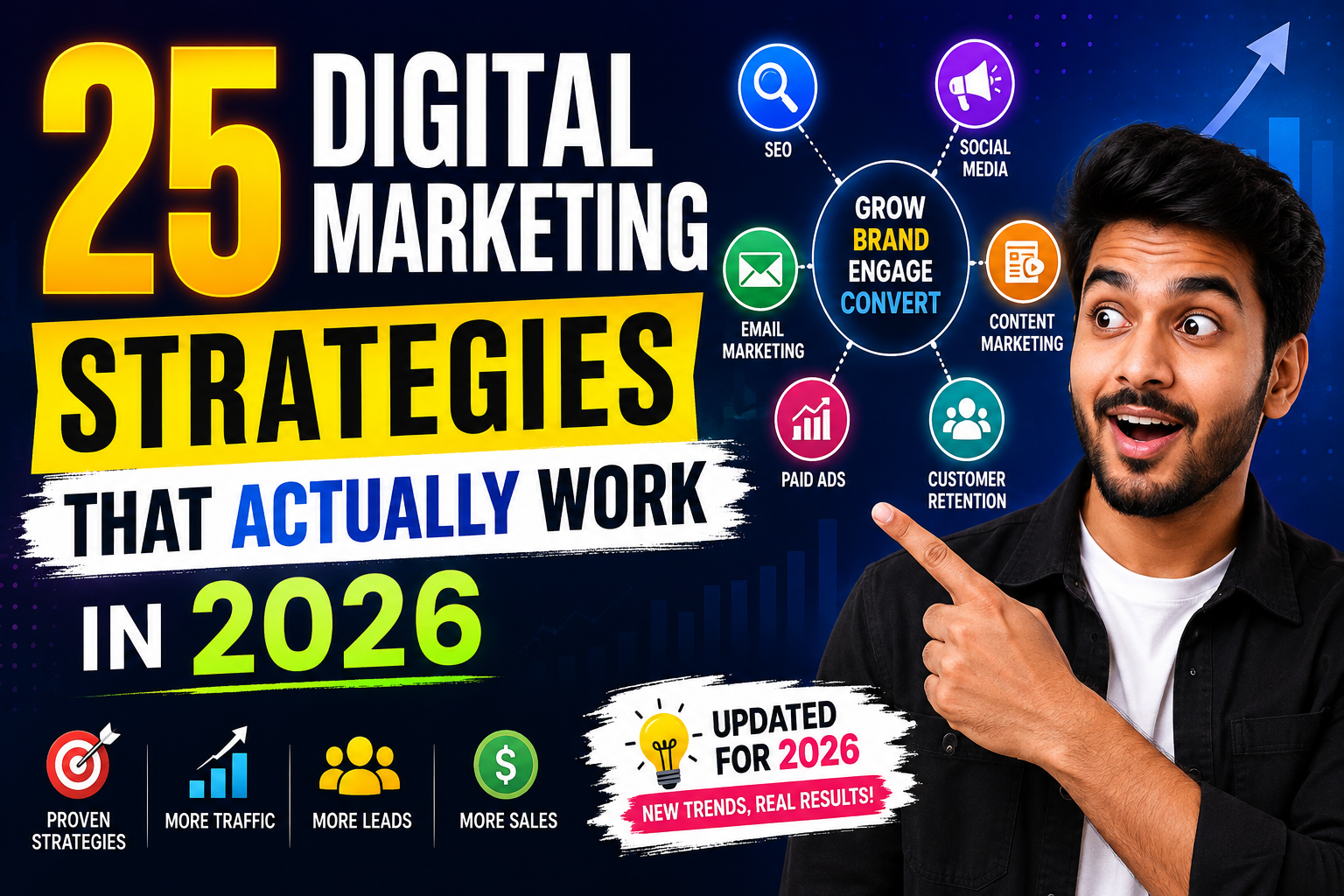
2026 is a different game. AI search, changing algorithms, shorter attention spans, and smarter customers mean the old playbook just doesn’t cut it anymore. This guide breaks down 25 strategies that are actually moving the needle right now, not theory, not guesswork, but what’s working on real campaigns for real businesses.
Table of Contents
ToggleQuick Answer
The most effective digital marketing strategies in 2026 combine AI powered content optimization, hyper local SEO, short form video, first party data collection, and conversational search optimization. Businesses that blend these with consistent branding and genuine community engagement are seeing the strongest returns, while those relying only on paid ads without organic presence are struggling.
What Is Digital Marketing in 2026?
Digital marketing today means reaching people wherever they’re actually searching, scrolling, or asking questions. That’s no longer just Google and Instagram. It now includes AI chat tools like ChatGPT and Gemini, voice search, YouTube Shorts, and even WhatsApp business chats.
Think about it this way. A few years back, if someone wanted a hair salon near them, they typed it into Google and picked from ten blue links. Now they might just ask an AI assistant, “which is the best hair studio near me for a keratin treatment,” and get one or two answers, not ten. That single shift changes everything about how visibility works.
A simple real world example. One of the salons we work with in Vizag used to rely purely on Instagram reels for bookings. Once we added local SEO and got them showing up in Google’s AI overview for “hair spa near me,” their walk ins jumped noticeably within six weeks, without spending a single extra rupee on ads.
Why Does This Matter So Much Right Now?
Because attention is more scattered and more expensive than it’s ever been. CPCs on Google and Meta keep climbing every quarter. Organic reach on most platforms keeps shrinking unless your content genuinely stops the scroll.
At the same time, buyers are more skeptical. They’ve seen a thousand ads promising the moon. What actually earns trust now is consistency, proof, and content that feels like it’s coming from a real person or business, not a script.
Businesses that adapt to these shifts are pulling ahead fast. The ones still running the same static image ads from 2022 are watching their cost per lead double while their competitors quietly eat their market share.
The Complete Guide: 25 Strategies That Work
1. Build for AI Search, Not Just Google Search
What It Means Your content needs to answer questions clearly enough that AI tools like ChatGPT, Gemini, and Perplexity can pull it directly into their answers.
Why It Matters More people are skipping the search results page entirely and asking AI tools instead. If your business isn’t structured to be “quotable,” you’re invisible in that conversation.
How To Do It: Write content in clear question and answer formats. Use headers that match how people actually phrase questions. Keep answers direct before going deeper.
Example Instead of a vague heading like “Our Services,” use “What Does a Keratin Treatment Cost in Hyderabad?” followed by a straight answer.
Pro Tip Test your own content by asking ChatGPT the question you’re targeting. If your business doesn’t show up, your content needs work.
2. Double Down on Local SEO
What It Means Making sure your business shows up when someone nearby searches for what you offer.
Why It Matters Nearly all local searches lead to a visit or call within a day. If you’re not ranking, someone else is getting that customer.
How To Do It Claim and fully optimize your Google Business Profile. Add real photos, keep hours updated, and respond to every single review, good or bad.
Example A local business client added weekly photo updates and started replying to reviews within a few hours. Their map pack ranking improved within a month.
Pro Tip Ask happy customers to mention the specific service they got in their review. It naturally boosts your keyword relevance.
3. Create Short Form Video Consistently
What It Means Regular reels, shorts, and quick videos, not one off attempts.
Why It Matters Short video still gets the highest organic reach across almost every platform right now, and it builds trust faster than any other format.
How To Do It Post at least three to four times a week. Show real moments, behind the scenes, transformations, or quick tips rather than polished ads.
Example A salon client filming quick before and after transformation clips saw way more engagement than their earlier promotional posts ever got.
Pro Tip The first two seconds decide everything. Open with the result or the hook, not a slow intro.
4. Use First Party Data Properly
What It Means Collecting your own customer data through forms, bookings, and sign ups instead of depending entirely on ad platforms.
Why It Matters Privacy changes keep making third party targeting less reliable. Your own customer list is something no algorithm update can take away.
How To Do It Set up simple lead capture through your website or WhatsApp. Offer something small in return, like a discount or free consultation slot.
Example Collecting phone numbers during appointment booking let one client run direct WhatsApp promotions that converted far better than cold ads.
Pro Tip Segment your list by service interest. A generic blast performs worse than a targeted one every time.
5. Optimize for Voice Search
What It Means Structuring content so it answers the way people speak, not just how they type.
Why It Matters Voice queries tend to be longer and more conversational, and they often trigger featured snippets.
How To Do It Include natural, full sentence questions in your content and answer them plainly right after.
Example “What time does the hair studio open on Sunday” performs differently than just “salon timings.”
Pro Tip FAQ sections are gold for this. Write them like someone is actually asking you out loud.
6. Run Retargeting Campaigns That Actually Convert
What It Means Showing ads to people who already visited your site or interacted with your content, not cold audiences.
Why It Matters Retargeted audiences convert at a much higher rate because they already know who you are.
How To Do It Set up a Meta pixel and Google tag on your site. Build separate retargeting sets based on what page someone viewed.
Example Someone who visited your pricing page but didn’t book gets a different ad than someone who just browsed your homepage.
Pro Tip Keep retargeting ads simple and direct. This audience needs a nudge, not another introduction.
7. Invest in Genuine Community Building
What It Means Creating a space, even a small one, where your audience actually interacts with you and each other.
Why It Matters Communities create loyal repeat customers who also bring referrals, which costs you nothing.
How To Do It Start a WhatsApp group, respond personally to DMs, or host small local events if that fits your business.
Example A client’s WhatsApp broadcast list for offers became one of their most reliable booking sources, better than most paid campaigns.
Pro Tip Don’t only sell in these spaces. Share tips and value regularly so people stay engaged.
8. Use AI Tools to Speed Up Content, Not Replace Strategy
What It Means Using AI for drafts, ideas, and research while keeping your judgment and brand voice in control.
Why It Matters AI can save hours of work, but content that sounds robotic pushes readers away instantly.
How To Do It Use AI for outlines or first drafts, then rewrite in your own voice with real examples and opinions.
Example Blog drafts that used to take a full day now take a couple of hours, freeing up time for actual client work.
Pro Tip Always read your content out loud before publishing. If it sounds stiff, it needs editing.
9. Focus on Topic Clusters, Not Random Blog Posts
What It Means Grouping related content around one core topic instead of publishing scattered, unrelated posts.
Why It Matters Search engines and AI tools reward sites that clearly demonstrate depth on a subject.
How To Do It Pick a core topic, then create supporting posts that link back to it, covering every angle a customer might search.
Example A “hair treatments” pillar page linking to individual posts on keratin, smoothening, and spa treatments performs better than isolated posts.
Pro Tip Update old posts in the cluster whenever you add a new one. It keeps the whole group relevant.
10. Get Serious About Google Reviews
What It Means Actively and consistently collecting reviews instead of hoping customers leave them on their own.
Why It Matters Review count and recency directly affect local ranking, and they influence buying decisions more than almost anything else.
How To Do It Ask at the perfect moment, right after a good experience, and make it as easy as sending a direct link.
Example A simple WhatsApp message with a review link right after checkout increased review volume noticeably for one client.
Pro Tip Never buy fake reviews. Platforms are getting better at catching them, and it can tank your visibility overnight.
11. Run Hyper Targeted Local Ads
What It Means Narrowing your ad radius and audience so you’re not wasting spend on people who’ll never walk into your store.
Why It Matters A tighter radius means higher relevance and lower cost per lead, especially for local service businesses.
How To Do It Set your ad radius to a realistic distance customers will actually travel, and layer in interest and age targeting.
Example Narrowing a salon’s ad radius from 15 kilometers to 5 kilometers cut their cost per booking significantly.
Pro Tip Test radius sizes every few months. Neighborhoods change, and so does foot traffic.
12. Repurpose Content Across Platforms
What It Means Turning one piece of content into multiple formats instead of creating everything from scratch each time.
Why It Matters It multiplies your output without multiplying your workload, which matters a lot for small teams.
How To Do It Take a blog post and break it into reels, carousel posts, and email snippets.
Example One detailed blog on skincare routines turned into five reels and a week’s worth of Instagram stories.
Pro Tip Change the hook for each platform. What stops a scroll on Instagram doesn’t work the same way on LinkedIn.
13. Use Interactive Content
What It Means Polls, quizzes, and simple calculators that get people to actually engage instead of just watching.
Why It Matters Interactive content boosts engagement signals, which platforms reward with more reach.
How To Do It Add polls to Instagram stories or simple quizzes like “which hair treatment suits you” on your site.
Example A story poll asking “curly or straight, which do you love more” got triple the usual response rate.
Pro Tip Always follow up interactive content with a soft call to action, since engaged users are warmer leads.
14. Prioritize Page Speed and Mobile Experience
What It Means Making sure your website loads fast and works smoothly on phones, since that’s where most traffic comes from.
Why It Matters A slow site loses visitors within seconds, and Google factors speed directly into rankings.
How To Do It Compress images, use a lightweight theme, and test your site regularly on Google PageSpeed Insights.
Example Shaving load time down by even two seconds on a client’s booking page reduced drop off noticeably.
Pro Tip Test on an actual budget phone with average network speed, not just your office wifi.
15. Use Email and WhatsApp Marketing Together
What It Means Combining both channels since each has strengths the other doesn’t.
Why It Matters WhatsApp gets read almost instantly, while email works better for detailed offers and newsletters.
How To Do It Use WhatsApp for quick reminders and flash offers, email for monthly updates and detailed promotions.
Example A festival offer sent through WhatsApp got same day responses, while the email version was opened over several days.
Pro Tip Don’t over message. Two or three WhatsApp broadcasts a month is usually the sweet spot before people start muting you.
16. Leverage Micro Influencers Over Big Names
What It Means Working with smaller, local creators instead of chasing big follower counts.
Why It Matters Micro influencers usually have tighter, more trusting audiences, and they cost a fraction of what bigger names charge.
How To Do It Find local creators in your city whose audience matches your customer profile, and offer a fair trade or paid collaboration.
Example A Vizag based creator with around fifteen thousand followers brought in more actual bookings for a salon than a bigger influencer with five times the following.
Pro Tip Look at comments, not just follower count. Real engagement beats a big but silent audience.
17. Build Trust Through Behind the Scenes Content
What It Means Showing the real people and process behind your business, not just polished final results.
Why It Matters People buy from people. Raw, honest content builds trust faster than perfectly staged posts.
How To Do It Film your team at work, share small wins and even honest struggles occasionally.
Example A quick clip of the team prepping before opening hours got more comments than a promotional post the same week.
Pro Tip Don’t overproduce these. The slight imperfection is what makes it feel real.
18. Optimize for Featured Snippets
What It Means Structuring answers so Google is likely to pull them into that box at the top of search results.
Why It Matters Snippets get seen before every other result, even paid ads sometimes.
How To Do It Answer common questions in forty to sixty words right after the heading, then expand below.
Example A concise answer to “how long does a keratin treatment last” landed in the snippet position within weeks.
Pro Tip Use bullet points or numbered steps where relevant. Google tends to favor scannable formats.
19. Track the Right Metrics, Not Vanity Numbers
What It Means Focusing on leads, bookings, and revenue instead of just likes and follower growth.
Why It Matters Vanity metrics feel good but don’t pay the bills. Real growth comes from tracking what actually converts.
How To Do It Set up proper conversion tracking through Google Analytics and Meta Ads Manager, and review it weekly.
Example Switching a client’s focus from follower count to cost per booking completely changed which campaigns got the budget.
Pro Tip Review numbers weekly, not just monthly. Small issues are cheaper to fix early.
20. Use Geo Targeted Content for Multiple Locations
What It Means Creating separate content and pages for each city or area you serve.
Why It Matters A single generic page rarely ranks well for multiple cities. Search engines want location specific relevance.
How To Do It Build separate landing pages for each location with local keywords, addresses, and even local testimonials.
Example Creating a dedicated Hyderabad page alongside the Vizag one helped a business rank in both cities instead of just one.
Pro Tip Mention local landmarks or areas naturally in the content. It builds relevance beyond just the keyword.
21. Build a Referral Program
What It Means Rewarding existing customers for bringing in new ones.
Why It Matters Referred customers convert faster and cost far less than paid acquisition.
How To Do It Offer a small discount or free add on for both the referrer and the new customer.
Example A simple “bring a friend, both get a discount” offer brought in a steady trickle of new customers every month without any extra ad spend.
Pro Tip Make the referral process as simple as sharing a link or a code. Friction kills referrals.
22. Use Data Driven A/B Testing
What It Means Testing two versions of an ad, headline, or page to see which actually performs better.
Why It Matters Guessing what works wastes budget. Testing tells you for certain.
How To Do It Change one variable at a time, whether it’s the headline, image, or call to action, and compare results.
Example Testing two different ad headlines revealed one converted almost twice as well, purely because of wording.
Pro Tip Give each test enough time and budget to reach a meaningful sample size before deciding a winner.
23. Optimize Your Website for Conversions, Not Just Traffic
What It Means Making sure visitors actually take action once they land on your site, not just browse and leave.
Why It Matters Traffic without conversion is just numbers on a dashboard. It doesn’t pay for anything.
How To Do It Add clear calls to action, simplify your booking form, and remove unnecessary steps.
Example Cutting a booking form from seven fields down to three noticeably increased completed bookings.
Pro Tip Every page should have one clear next step. Too many options confuse visitors into doing nothing.
24. Stay Active in Google’s AI Overview and AI Mode
What It Means Making sure your content is structured in a way that AI generated search summaries can pull from directly.
Why It Matters These AI summaries are increasingly the first thing people see, sometimes above all other results.
How To Do It Use clear structured content, proper headings, and direct answers early in each section.
Example A well structured FAQ section helped a client’s content get referenced in an AI overview for a competitive local search term.
Pro Tip Keep monitoring which of your pages show up in AI summaries and refine the ones that don’t.
25. Stay Consistent, Not Just Occasionally Active
What It Means Showing up regularly across your chosen platforms instead of posting in bursts and going silent.
Why It Matters Algorithms and audiences both reward consistency. Sporadic posting looks unreliable and gets deprioritized.
How To Do It Build a simple content calendar and stick to a realistic posting frequency you can actually maintain.
Example A client who moved from random posting to a fixed three times a week schedule saw steadier, more predictable growth.
Pro Tip Consistency beats perfection. A slightly imperfect post published on schedule beats a perfect one that never goes out.
Common Mistakes Businesses Make
Mistake: Chasing every new platform Impact: Spreads your time and budget too thin, and nothing gets done well. Solution: Pick two or three platforms where your actual audience spends time and go deep there.
Mistake: Ignoring negative reviews Impact: Damages trust and signals to Google that you’re inactive. Solution: Respond calmly and professionally to every review, even the harsh ones.
Mistake: Running ads without a clear offer Impact: Burns budget on clicks that never convert. Solution: Always have a specific, clear offer before you spend a single rupee on ads.
Mistake: Copying competitor content word for word Impact: Search engines can flag duplicate content, and it hurts your credibility. Solution: Study what competitors do well, then create something original in your own voice.
Best Practices
Keep your branding consistent across every platform, from your profile photo to your tone of voice.
Reply to comments and messages quickly. Speed matters more than people realize when it comes to trust.
Review your analytics every single week, not just when something feels off.
Test small before scaling any campaign. A five hundred rupee test can save you from wasting fifty thousand.
Tools and Resources
| Tool | Best For | Price Range |
|---|---|---|
| Google Business Profile | Local SEO and reviews | Free |
| Meta Ads Manager | Facebook and Instagram ads | Pay per click |
| Canva | Quick graphic design | Free to around 500 INR per month |
| Google Analytics | Traffic and conversion tracking | Free |
| WhatsApp Business | Direct customer communication | Free |
| Ubersuggest or Ahrefs | Keyword research | Around 1000 to 5000 INR per month |
Real Life Example
Situation: A local hair studio in Vizag was spending heavily on ads but bookings stayed flat month after month.
Challenge: Their content looked generic, their Google Business Profile was barely updated, and they had zero review strategy.
Action: We rebuilt their local SEO, started weekly review requests, and shifted their content to short, honest behind the scenes videos instead of polished promotional posts.
Result: Within two months, organic bookings climbed noticeably, and their cost per paid lead dropped because their overall brand trust improved.
Expert Tips
Don’t treat SEO and social media as separate departments. The best results come when they support each other, blog content feeding social posts, and social driving traffic back to the site.
Watch what questions people actually ask in your DMs and comments. That’s free market research most businesses ignore completely.
Budget for testing, always. Even a small percentage of your monthly spend set aside for experiments will teach you more than any course.
Frequently Asked Questions
What is the most effective digital marketing strategy in 2026?
Local SEO combined with consistent short form video content tends to deliver the strongest return for most small and medium businesses right now.
How much should a small business spend on digital marketing?
It varies, but many small businesses start seeing solid results spending somewhere between ten thousand to thirty thousand INR per month across ads and content.
Is SEO still worth it in 2026?
Yes, and arguably more than ever, since AI search tools still pull their answers from well optimized, trustworthy web content.
How often should I post on social media?
Three to five times a week works well for most businesses, as long as it’s sustainable long term.
Do I need a website if I'm active on social media?
Yes. Social platforms can change their rules anytime, but your website is something you fully control.
What's the difference between SEO and AEO?
SEO focuses on ranking in traditional search results, while AEO focuses on getting your content pulled into AI generated answers and overviews.
How long does SEO take to show results?
Usually three to six months for noticeable movement, though local SEO can sometimes show faster results.
Should small businesses use AI tools for marketing?
Yes, for speeding up research and first drafts, but human judgment and editing should always shape the final output.
What's the best way to get more Google reviews?
Ask right after a positive experience and make it as easy as sharing a direct link.
Is paid advertising still necessary if I do SEO well?
It helps speed things up, especially early on, but a strong SEO foundation reduces how much you need to rely on ads over time.
Key Takeaways
- AI search and AI overviews are changing how visibility works, and businesses need to structure content for both humans and AI tools
- Local SEO and Google reviews remain some of the highest return activities for local businesses
- Short form video and consistency beat occasional, polished, perfect content
- First party data through WhatsApp and email is more valuable than ever
- Tracking real conversions matters far more than chasing likes and followers
Conclusion
None of these strategies work in isolation, and none of them work overnight. What actually moves the needle is picking a handful that fit your business, doing them consistently, and refining based on what the data tells you.
The businesses winning right now aren’t necessarily the ones with the biggest budgets. They’re the ones showing up consistently, building real trust, and paying attention to where their customers are actually spending time and asking questions.
Ready to Actually Grow?
If you’re tired of guessing what works and want a strategy built around your specific business and market, that’s exactly the kind of work we do every day. Reach out and let’s figure out what makes sense for you, no generic templates, just a plan that fits.