

LinkedIn Content Ideas That Bring Clients You post on LinkedIn every week. You show up, you write something useful, you even add a nice photo. And still, nothing happens. No DMs, no leads, no one saying “hey, can we talk about working together.”
If that sounds familiar, you are not doing anything wrong as a person. You are just posting content that gets attention instead of content that gets clients. Those are two very different things, and most people never learn the difference.
Table of Contents
ToggleIntroduction
LinkedIn today is not the sleepy resume site it used to be. It has turned into one of the strongest places to get inbound clients, especially if you run a service business, an agency, or you are a consultant or freelancer trying to build trust with the right audience.
But here is the catch. Most content on LinkedIn is built for reach, not revenue. People chase likes, comments, and reshares, and somewhere in that chase they forget the actual goal, which is getting someone to raise their hand and say they need help.
In this guide, we are going to break down what actually works. Real content ideas, the thinking behind why they work, and how to use them without sounding like a walking advertisement. By the end, you will have a content approach you can start using this week, not some theory you file away and never touch.
Quick Answer LinkedIn Content Ideas That Bring Clients
LinkedIn content that brings clients usually falls into a few buckets: sharing real client results and case studies, breaking down your process, answering the questions your ideal client is silently asking, showing your personality and opinions, and posting content that starts conversations instead of just getting scrolled past. The goal is trust first, visibility second.
What Is Client Generating Content On LinkedIn?
Client generating content is any post that moves a stranger closer to trusting you enough to have a conversation. That is it. It is not about going viral. A post can get 40 likes and bring you two solid leads, while another post gets 4000 likes and brings you nothing.
Think of it like this. If you run a digital marketing agency in Hyderabad and you post a case study about how you helped a local salon go from struggling with bookings to a full calendar, someone reading that who owns a similar business is not just entertained. They are thinking, “wait, this person understands my exact problem.”
That is the difference. Entertainment content gets attention. Trust content gets clients.
Why Is It Important?
Because attention without trust is just noise. You could have ten thousand followers and still struggle to close a single deal if none of your content builds credibility around your actual service. The businesses that win on LinkedIn right now are the ones treating it like a slow, steady relationship builder. Someone sees your post today, maybe comments next week, and messages you in a month when they actually need what you offer. That timeline is normal. LinkedIn rewards patience and consistency far more than a lucky viral post ever will. There is also a trust factor unique to LinkedIn. People expect a bit of professionalism here, so when you show real expertise mixed with honesty, it stands out more than it would on other platforms where everyone is shouting.
Complete Guide: Content Ideas That Actually Bring Clients
1. Behind the Scenes of Your Actual Work
What It Means
Show people what you actually do day to day, not a polished highlight reel, but the real process behind delivering results.
Why It Matters
People buy based on trust, and trust grows when they see the work, not just the promise. Showing your process removes the mystery and makes you look like someone who genuinely knows their craft.
How To Do It
Take a project you are currently working on and break it into a short story. What was the client’s problem, what did you actually do, what did you notice along the way. Keep it simple, like you are explaining it to a friend over coffee.
Example
A social media manager could post, “Spent this morning auditing a client’s Instagram. Found out half their reels were getting killed by weak hooks in the first two seconds. Fixed the intro pattern, and honestly it is such a small tweak that most people skip.”
Pro Tip
Do not oversell it. The more casual and real it sounds, the more people trust it.
2. Client Wins and Case Studies
What It Means
Sharing a specific result you got for a client, told as a mini story rather than a boastful announcement.
Why It Matters
Numbers and outcomes speak louder than any claim you make about yourself. A story with a before and after does the selling for you.
How To Do It
Structure it simply. What was the situation before, what did you do, what changed. Keep the tone humble, almost like you are sharing an update rather than bragging.
Example
“A hair studio client came to us with barely any online bookings. Three months of consistent content and targeted ads later, they are seeing a steady stream of new client walk ins every week. Nothing fancy, just showing up consistently and testing what actually clicks with their audience.”
Pro Tip
Always ask permission before sharing numbers publicly, even rough ones. Trust goes both ways.
3. Answering The Silent Questions Your Ideal Client Has
What It Means
Every industry has questions people are too shy or unsure to ask directly. Your content should answer them before they even type them out.
Why It Matters
If someone reads your post and thinks, “wait, that is exactly what I wanted to know,” you have already positioned yourself as the expert without even trying to sell anything.
How To Do It
Think about the last five conversations you had with potential or existing clients. What questions came up repeatedly. Turn each one into its own post.
Example
“Clients often ask me why their ad spend is not converting even though the ads look good. Nine times out of ten, it is not the creative. It is the offer or the landing page killing the momentum.”
Pro Tip
Do not answer in vague generalities. Be specific enough that people feel like they got real value, not a teaser.
4. Opinions and Hot Takes (With Reason Behind Them)
What It Means
Sharing a perspective that goes slightly against common advice in your industry, backed by why you believe it.
Why It Matters
Neutral, safe content blends in. A clear opinion, even a mildly controversial one, makes people stop scrolling and pay attention to who you are.
How To Do It
Pick something you genuinely disagree with in your field. Explain your reasoning calmly, without being aggressive about it.
Example
“I do not think posting five times a day on Instagram works for most small businesses anymore. I would rather post twice with actual thought behind it than flood the feed and burn out the team.”
Pro Tip
Back your opinion with a small example or reasoning. An opinion without context just sounds like complaining.
5. Myth Busting Posts
What It Means
Correcting a common misunderstanding people have about your industry or service.
Why It Matters
This immediately builds authority because you are the one clearing up confusion instead of adding to it.
How To Do It
List a common belief, explain why it is wrong or outdated, then share what actually works instead.
Example
“A lot of business owners think more followers automatically means more sales. I have seen accounts with five thousand followers outperform accounts with fifty thousand, simply because the smaller one had a more targeted, trusting audience.”
Pro Tip
Keep the tone helpful, not condescending. You want people to feel informed, not embarrassed.
6. Personal Stories With A Business Lesson
What It Means
Sharing something personal, a mistake, a lesson, a turning point, and tying it back to how it shaped the way you work.
Why It Matters
People connect with people, not brands. A little vulnerability makes you memorable in a feed full of polished, robotic posts.
How To Do It
Think of a moment where something did not go as planned. Share what happened and what you learned, briefly and honestly.
Example
“Early on, I lost a client because I was so focused on strategy that I forgot to actually communicate progress clearly. Now I send a short weekly update to every client, even if there is nothing major to report.”
Pro Tip
Do not force a lesson if there is not one. Sometimes a story is just a story, and that is fine too.
7. Educational Carousels or Step by Step Posts
What It Means
Breaking down a process into simple, digestible steps, either as a text post or a carousel.
Why It Matters
People save and share genuinely useful content, and every save signals to LinkedIn that your content deserves more visibility.
How To Do It
Pick one specific problem, then walk through the exact steps to solve it. Keep each step short.
Example
A five step breakdown on “How to write a LinkedIn post that does not feel like an ad” would work well here, since it directly matches what your audience wants to learn.
Pro Tip
End with a soft question to invite comments, something like asking what step people find hardest.
8. Comparison Style Posts
What It Means
Comparing two approaches, tools, or strategies and explaining which works better and why.
Why It Matters
Comparisons help people make decisions, and being the one who simplifies that decision builds trust fast.
How To Do It
Choose two commonly debated options in your field and give an honest, balanced breakdown before sharing your recommendation.
Example
Comparing organic content versus paid ads for a new business with a limited budget, and explaining which one usually makes more sense in the early stage.
Pro Tip
Avoid sounding like you are pushing one option just because it benefits your service. Be genuinely balanced.
Common Mistakes
Mistake: Posting only promotional content about your services. Impact: People tune it out fast, since it feels like an ad every single time. Solution: Follow a rough rule where most posts educate or share a story, and only a small portion directly promote your offer.
Mistake: Writing long posts with no clear point. Impact: People lose interest halfway and scroll past without reading the actual message. Solution: Get to the point early, then use the rest of the post to support it with detail or story.
Mistake: Ignoring comments on your posts. Impact: You miss the exact moment someone shows interest and is open to a conversation. Solution: Reply to every comment, even a short one, since that is often where the real relationship starts.
Mistake: Copying trending post formats without adjusting them to your voice. Impact: The content feels forced and disconnected from who you actually are. Solution: Use formats as a rough skeleton, then fill it with your own tone, stories, and language.
Best Practices
Post consistently rather than sporadically, even if that means two solid posts a week instead of daily posts with no thought behind them. Write the way you talk. If you would not say a sentence out loud to a client, do not write it either.
Engage with other people’s posts in your niche regularly, not just your own content. Visibility grows both ways.
Track which posts actually lead to conversations, not just likes, and lean into more of that kind of content.
Tools and Resources
| Purpose | Tool | Why It Helps |
|---|---|---|
| Writing and drafting | Notion or Google Docs | Keeps ideas organized before you post |
| Scheduling | Buffer or Taplio | Saves time and keeps consistency |
| Analytics | LinkedIn native analytics | Shows what content actually drives profile visits |
| Carousel design | Canva | Simple way to create clean visual posts |
Real-Life Example
Situation: A small digital marketing agency working with local service businesses was posting daily on LinkedIn but getting almost no client inquiries despite decent engagement.
Challenge: Their content was mostly generic tips copied from other creators, with no real story or proof behind it.
Action: They shifted to sharing actual client results, honest opinions about common marketing mistakes, and behind the scenes posts about their process, cutting posting frequency down but increasing quality.
Result: Within two months, they started getting direct messages from business owners who related to the specific problems mentioned in the posts, leading to several new client conversations without any paid promotion.
Expert Tips
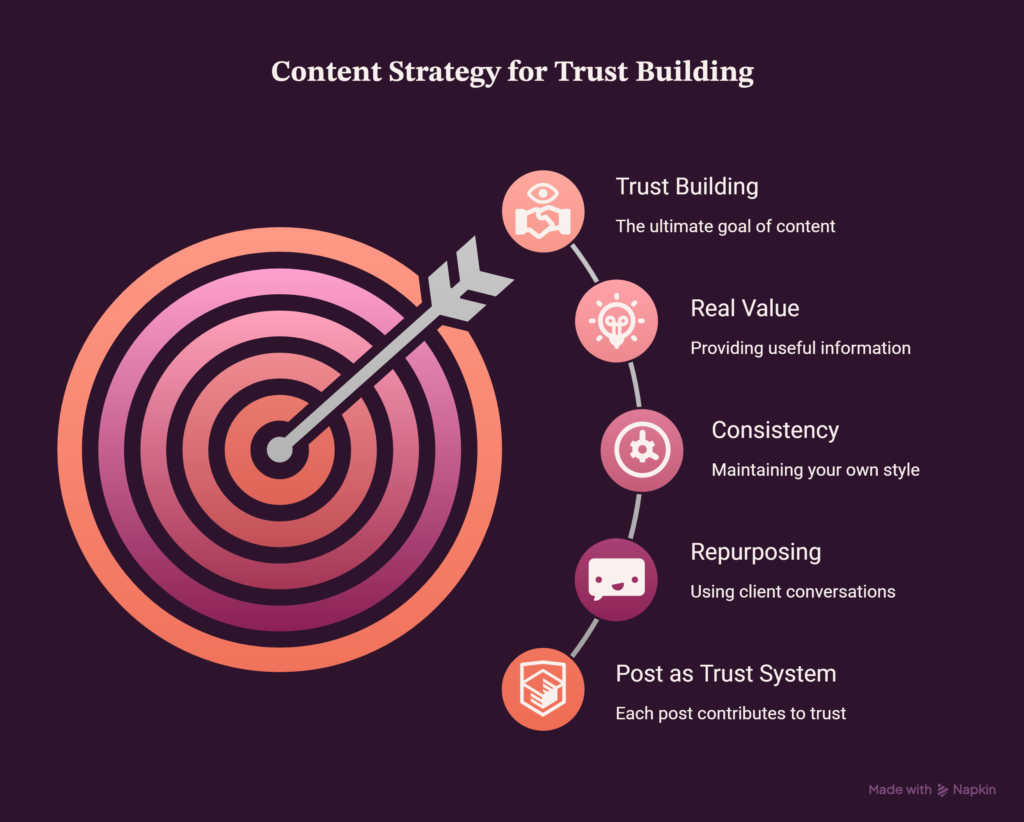
Treat every post like a small piece of a larger trust building system, not a one time pitch.
Repurpose client conversations into content. If a client asks a great question, that question is probably your next post.
Do not chase every trending format. Consistency in your own lane beats jumping around trying to copy what is working for someone else.
Give away real value in your posts. The people who are truly interested in hiring you will still reach out, and the ones who just wanted free advice were never going to pay anyway.
Frequently Asked Questions
How often should I post on LinkedIn to attract clients?
Two to four times a week is usually enough if the content is thoughtful. Quality and relevance matter far more than frequency.
Does LinkedIn content actually work for local service businesses?
Yes, especially B2B services and consultants, though even local businesses like salons or clinics can benefit if they target the right audience with the right story.
Should I only post about my industry?
Mostly yes, but mixing in occasional personal stories or lessons keeps your profile feeling human rather than purely promotional.
What is the ideal length for a LinkedIn post?
There is no fixed rule, but posts between 100 and 300 words tend to perform well since they are detailed enough to add value without feeling like a chore to read.
Should I use hashtags on LinkedIn?
A few relevant ones can help with discovery, but three to five is plenty. Stuffing a post with hashtags looks unnatural.
How do I turn LinkedIn engagement into actual client conversations?
Reply to comments personally and, when it feels natural, move the conversation to direct messages where you can understand their specific need.
Is it okay to share client results publicly?
Yes, as long as you have their permission, even if you keep exact numbers vague or use general terms instead of hard figures.
What if I do not have many client stories to share yet?
Share your process, your opinions, and lessons from smaller projects. Every business started with limited proof, and honesty about being in that stage can still build trust.
Should I post videos or just text?
Text posts still perform strongly on LinkedIn, but native video and simple carousels can add variety and often get more engagement.
How long does it take to see client results from LinkedIn content?
Usually a few weeks to a few months of consistent posting before you start noticing steady inbound interest, since trust takes time to build.
Key Takeaways
- Content that brings clients focuses on trust, not just reach
- Share real client wins, honest opinions, and behind the scenes work
- Answer the questions your ideal client is silently thinking about
- Avoid pure promotional posts and generic copied advice
- Reply to comments since that is often where real conversations begin
- Consistency over time matters more than chasing viral posts
Conclusion
LinkedIn is not a lottery ticket where one lucky post changes everything. It is closer to planting seeds. Some weeks nothing seems to happen, and then suddenly someone messages you saying they have been following your posts for months and are finally ready to talk.
The businesses and professionals who get real clients from LinkedIn are the ones who stopped chasing likes and started building actual trust, one honest post at a time.
CTA
If you want help building a LinkedIn content strategy that actually brings in client conversations instead of just empty engagement, reach out and let us walk through what would work best for your business.