
Most businesses are on social media. Very few are actually growing because of it.
There’s a difference between posting content and building a system that brings in customers. If you have felt stuck posting daily with nothing to show for it, you are not doing it wrong, you just haven’t seen the full picture yet. That’s what this guide is for Social Media Marketing Strategy
Table of Contents
ToggleQuick answer: Social Media Marketing Strategy
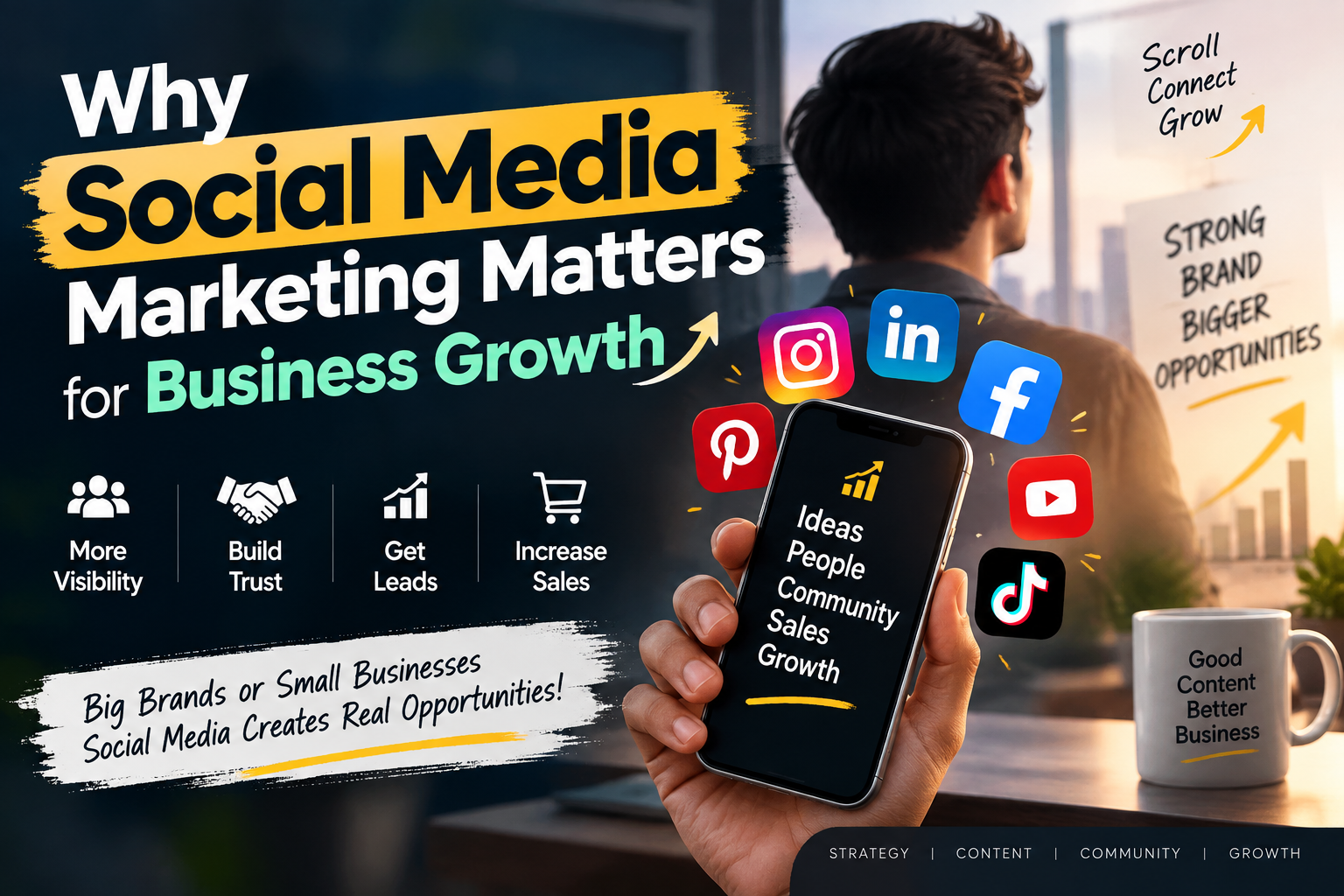
Social media marketing helps businesses grow by building brand visibility, earning customer trust, generating leads, and driving website traffic at a fraction of traditional advertising cost. When done with a clear strategy instead of random posting, it turns followers into paying customers and keeps a brand relevant in a crowded market.
1. What Is Social Media Marketing
Social media marketing is simply using platforms like Instagram, Facebook, LinkedIn, and YouTube to promote your business, connect with your audience, and eventually turn that connection into sales. It’s not just posting pretty pictures. It includes content, ads, engagement, analytics, and a fair bit of patience.
Think of it like running a shop in a busy market. You can have the best product inside, but if nobody knows your shop exists, it doesn’t matter. Social media is how you get people walking past to actually stop and look.
A few real examples make this easier to understand.
Flipkart's food delivery launch
is a good case study on how even a big brand needs the right social positioning before entering a crowded market. When Flipkart tried to step into food delivery, the challenge wasn’t the product, it was convincing people why a shopping giant belonged in that space at all. It’s a reminder that social media marketing isn’t only for small businesses figuring things out. Even large companies need a story that makes sense to their audience.
Meta Ads deserve a mention too, because most businesses jump into running ads before understanding the basics. Before you put money behind a campaign, know your audience, set a realistic budget, and test small before scaling. A lot of wasted ad spend comes from skipping this step and expecting results overnight.
Cashfree Payments grew into a company valued in the crores by building trust with businesses long before it became a household name in payments. Their growth wasn’t about viral posts. It was steady, consistent brand building that made people confident enough to hand over their transactions to them.
CRED is probably the most talked about example in Indian fintech marketing. Kunal Shah built CRED around exclusivity and a strong brand identity, and social media played a huge role in making people curious about an app that, on paper, just helps you pay credit card bills. That curiosity is marketing doing its job well.
2. How Businesses Use Social Media Marketing
Businesses use social platforms for a lot more than just selling. They use it to announce new products, answer customer questions in real time, share behind the scenes content, run offers, and keep their brand visible between purchases.
A hair studio, for example, might post client transformations to attract new bookings. A local restaurant might post their daily specials to bring in walk ins. A software company might share client wins on LinkedIn to build credibility. Same platforms, completely different goals, and that’s the beauty of it.
3. Boost Brand Awareness Through Social Media
If people don’t know you exist, they can’t buy from you. It’s that simple.
Social media puts your brand in front of people who might never have found you otherwise. Every post, every story, every reel is a small chance to be seen. Do it consistently and your name starts showing up in conversations you’re not even part of yet.
4. Social Media Helps Build Customer Trust
People buy from brands they trust, not just brands they’ve heard of. Trust comes from being visible, being responsive, and being honest, even when something goes wrong.
Replying to comments, showing real customer reviews, and being upfront about pricing or delays does more for trust than any polished ad campaign. A brand that disappears after a sale and one that stays present after it are remembered very differently.
5. Promote Products and Services Easily
Social media removes a lot of the friction that used to exist in marketing. You don’t need a huge budget or a production house to show off what you’re selling. A well shot reel on a phone can do the job.
This is especially useful for small businesses that want to promote a new service or product launch without spending a fortune on traditional advertising.
6. Know Your Audience Better
One underrated benefit of social media is the data it hands you for free. You can see who is engaging with your content, what time they’re online, what type of posts they respond to, and what they simply scroll past.
This isn’t guesswork anymore. If you’re paying attention, your audience is basically telling you what they want.
7. Share Your Brand Story
People connect with stories, not spreadsheets. Why you started your business, what problem you’re solving, the struggles along the way, all of this makes a brand feel human.
A brand with a story sticks in memory longer than a brand that only talks about discounts.
8. Drive Website Traffic
Social platforms are one of the easiest ways to send people to your website, whether that’s a blog, a product page, or a booking form. A strong call to action in your bio, captions, or stories can quietly move a good chunk of your audience from scrolling to actually visiting your site.
9. Social Media Marketing Is Cost-Effective
Compare this to traditional advertising like hoardings or newspaper ads, and social media wins on cost almost every time. You can start with a few hundred rupees a day on ads and still reach a specific, relevant audience.
Small businesses especially benefit here, since it levels the playing field a bit against bigger competitors with bigger budgets.
10. Improve Customer Engagement
Comments, polls, question stickers, quick replies, all of these turn a one way announcement into an actual conversation. And conversations build relationships faster than any advertisement ever could.
Engagement also tells the algorithm your content is worth showing to more people, so it’s a bit of a two way benefit.
11. Social Media Supports Lead Generation
A well placed lead form, a WhatsApp click button, or even a simple “DM us to book” in your caption can quietly bring in leads every single day. Most businesses underestimate how much of their lead flow can come from social media once the basics are set up properly.
12. Best Social Media Marketing Strategies
Strategy is where most businesses fall short. Posting without a plan rarely leads anywhere useful.
12.1 Focus on Short Form Videos
Reels, Shorts, and quick video content are getting more reach than static posts right now. If you’re not using video yet, you’re leaving visibility on the table.
12.2 Post Consistently
One viral post won’t build a brand. Consistent, regular posting is what keeps you visible and keeps the algorithm favoring your content.
12.3 Use High Quality Visuals
You don’t need expensive equipment, but blurry photos and shaky videos do hurt how your brand is perceived. A little effort in visuals goes a long way.
12.4 Engage With Followers
Reply to comments. Answer DMs quickly. This alone can set you apart from competitors who post and disappear.
13. Common Social Media Marketing Mistakes
13.1 Inconsistent Posting
Posting daily for two weeks and then disappearing for a month confuses both your audience and the algorithm. Consistency matters more than frequency.
13.2 Ignoring Analytics
If you’re not checking what’s working, you’re just guessing every time you post. Analytics tell you exactly where to put your effort.
13.3 Posting Without Strategy
Random posts with no clear goal rarely convert into sales. Every post should have a purpose, even if that purpose is just staying visible.
13.4 Using Poor Quality Content
Low effort content signals a low effort brand, whether that’s fair or not. First impressions matter, especially on platforms built around visuals.
14. Future of Social Media Marketing
Video content, AI powered personalization, and platforms getting smarter about showing relevant content to the right people, that’s where things are heading. Businesses that adapt early usually get more reach for less effort simply because they’re ahead of the curve.
Search behavior is also shifting. People are starting to ask AI tools and chat assistants for recommendations, not just Google. Brands that build genuine authority and trust online are the ones showing up in those answers too.
15. Why Small Businesses Need Social Media
For a small business, social media is often the most affordable way to compete with bigger players. It builds visibility, trust, and a direct line to customers without needing a massive marketing budget.
A local hair studio or a neighborhood cafe can build a loyal following just as strong as a national brand, sometimes even stronger, because local businesses can be more personal and responsive.
16 Frequently Asked Questions
Why is social media marketing important?
It helps businesses stay visible, build trust, and reach customers directly without relying entirely on traditional advertising.
What is the best social media platform for business?
It depends on your audience. Instagram and Facebook work well for most local businesses, while LinkedIn suits B2B services better.
How often should businesses post on social media?
Three to five times a week is a reasonable starting point, as long as it’s consistent and the content adds value.
Can social media increase sales?
Yes, especially when paired with clear calls to action, good engagement, and occasional paid promotion to reach a wider audience.
Is social media marketing affordable?
Yes. Compared to traditional advertising, it’s one of the most budget friendly ways to reach a targeted audience, even for small businesses.
17. Final Thought
Social media marketing isn’t magic, but it works when it’s done with a plan. Post with purpose, stay consistent, listen to your audience, and give it time.
If you’re running a business and still figuring out how to make social media actually bring in customers instead of just likes, that’s exactly the kind of problem worth solving properly rather than guessing your way through.
[…] Business Profile Collected Info: What Local Businesses Need To Know In 2026 How Social Media Marketing Drives Real Business Growth in 2026 ₹1,000 a Day. One Local Business. And a Lot of Things That Didn’t Go as Planned. How […]
[…] in 2026 Google Business Profile Collected Info: What Local Businesses Need To Know In 2026 How Social Media Marketing Drives Real Business Growth in 2026 ₹1,000 a Day. One Local Business. And a Lot of Things That Didn’t Go as Planned. How […]
[…] in 2026 Google Business Profile Collected Info: What Local Businesses Need To Know In 2026 How Social Media Marketing Drives Real Business Growth in 2026 ₹1,000 a Day. One Local Business. And a Lot of Things That Didn’t Go as Planned. […]
[…] in 2026 Google Business Profile Collected Info: What Local Businesses Need To Know In 2026 How Social Media Marketing Drives Real Business Growth in 2026 SEO […]